Branding
How Fixing Your Website’s UX Can Increase Conversion
People pay $8 for soap they could get for $2—because they like the people selling it. That's the shift. Data can't make anyone feel anything. Stories can.

Brandon King
Mar 19, 2025
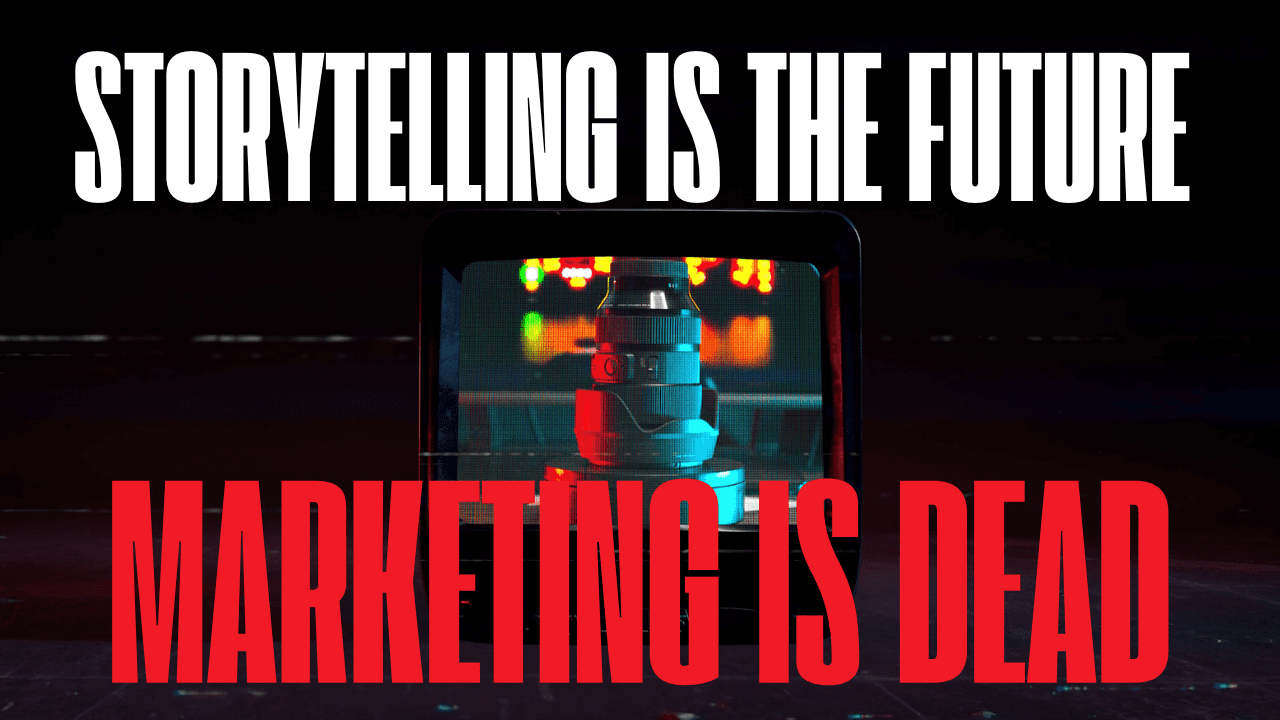
Storytelling Is the Key to Modern Marketing—Here's the Proof
There's an $8 bar of soap that changed how I think about marketing.
Let me explain.
In Mark Schaefer's book The Marketing Rebellion, he tells the story of a group of consumers who had a choice. They could walk into Walmart and grab a perfectly functional bar of soap for $2. Or they could go down the street to a mom-and-pop shop and pay $8 for essentially the same thing.
Time and time again, people chose the $8 soap.
When researchers asked why—why would you pay four times the price for the same product—the answer wasn't about quality. It wasn't about ingredients. It wasn't about some fancy marketing funnel or limited-time offer.
It was simpler than that.
"We like them more."
That's it. They liked the people behind the product. They felt connected. They felt like they knew them. The story of a small, local shop run by real people resonated more than the convenience and cost savings of a corporate giant.
And that right there is everything you need to know about why traditional marketing is dying.
The Rules Changed. Most Brands Didn't Notice.
We all know what traditional marketing looks like. Product shots. Feature lists. "Buy now, limited time offer." Talking heads reading scripts about why their widget is 15% more efficient than the competitor's widget.
It worked for decades. And then it stopped.
COVID accelerated something that was already happening beneath the surface. People got forced to slow down, to reevaluate, to ask themselves what actually mattered. And one of the things they realized—consciously or not—is that they care more about who is selling them something than what is being sold.
This isn't some soft, feel-good theory. It's playing out in purchasing decisions every single day.
The brands winning right now aren't the ones with the biggest ad budgets or the slickest product demos. They're the ones who figured out how to make you feel something. The ones who stopped treating customers like conversion metrics and started treating them like humans who want to be part of something.
The differentiator isn't your product. It's your story.
Data Can't Make Anyone Feel Anything
Here's the uncomfortable truth that a lot of marketers don't want to hear: data alone cannot invoke empathy.
You can throw statistics at people all day. You can show them charts and graphs and ROI projections and case studies with impressive percentages. And their eyes will glaze over. They'll nod politely. They'll forget everything you said by the time they close the browser tab.
But tell them a story about a real person with a real problem who found a real solution? Now you've got their attention. Now you've created a pathway to their emotions. Now they're not just processing information—they're feeling something.
This is why Coca-Cola's AI-generated holiday campaign last year was such a disaster. They tried to save some money by letting artificial intelligence create their ads, and the audience hated it. Not because it looked bad—it looked fine. They hated it because it felt like nothing.
It lacked humanity. And people can sense that instantly.
Storytelling is the most human thing we do. It's how we've passed down knowledge for thousands of years. It's how families stay connected to ancestors they never met. It's how we learn morals, develop judgment, understand consequences we've never personally experienced.
Think about your own life. How many times has someone warned you about a decision by starting with, "Let me tell you about what happened to my friend..." or "I know a guy who tried that once..."
There's always a story. Because stories are how we make sense of the world. They're how we transfer experience from one person to another without that person having to live through it themselves.
When you remove that element—when you strip the humanity out of your marketing and replace it with algorithms and automation and "optimized" messaging—you lose the one thing that actually connects.
What Storytelling Actually Looks Like (A Real Example)
Let me give you a practical example of how this works.
I wear Flux Footwear. They specialize in shoes with a wider toe box—basically, shoes designed for people whose feet aren't shaped like the narrow, tapered foot that traditional shoe companies seem to think everyone has.
I've got wider feet, and for years I struggled to find shoes that didn't make my feet feel cramped and uncomfortable by the end of the day. My wife sent me a link to Flux, I was skeptical, but I took the risk and ordered a pair.
Absolutely love them. One of my favorite pairs of shoes I've ever owned. I've bought multiple pairs since. Got my dad to buy some. People ask me about them constantly.
Now here's where it gets interesting from a marketing perspective.
Flux could run traditional ads. "Wide toe box technology. 40% more room for your toes. Ergonomically designed. Buy now."
Fine. Forgettable. Same as everyone else.
Or they could tell my story. They could tell the story of thousands of people just like me who spent years cramming their feet into shoes that weren't designed for them. People who assumed the discomfort was normal. People who didn't even know there was an alternative.
Better yet—they could document that story.
Imagine a short film following someone with actual foot problems. Someone whose feet are shaped differently, or damaged from years of wearing the wrong shoes. You document their struggle. You let them talk about the pain, the frustration, the resignation that this is just how it is.
Then you give them Flux shoes. And you follow them for 30 days.
You document the transformation. Not in a staged, scripted testimonial—but in real time. You capture the moment they realize their feet don't hurt at the end of the day. You capture the surprise, the relief, the disbelief that something so simple could make such a difference.
That's not a commercial. That's a story. And it will outperform any UGC selfie-style testimonial by a factor of ten.
Why? Because we got to watch someone go through it. We didn't just hear about the result—we experienced the journey. We connected with that person's pain because we've felt it ourselves, or we know someone who has. And now we're emotionally invested in the outcome.
That's the power of story-driven marketing. You're not selling a product. You're inviting people into an experience.
The Blueprint Is Already Out There (You Just Have to Pay Attention)
Here's the secret to getting better at storytelling: go watch TV.
Seriously. Go watch movies. Go consume media that makes you feel something. And then figure out why it made you feel that way.
I'm embarrassingly late to the party, but I just finished watching Breaking Bad for the first time. I know—it's 2025. I'd heard about it for years. I knew the major plot points. I knew who Walter White was and who Heisenberg was.
But sitting down and actually watching it from beginning to end? Completely different experience.
That show put me through more emotions than I was prepared for. I was stressed. I was angry. I was sympathetic. I was horrified. I couldn't wait for it to be over because of how much it was affecting me—and I couldn't stop watching because I needed to see what happened next.
And here's the thing: on paper, the premise is simple. A high school chemistry teacher gets diagnosed with terminal cancer. He has nothing to leave his family. So he decides to cook meth.
That's it. That's the plot.
But what makes it a masterpiece isn't the plot—it's the character journey. You watch a desperate, sympathetic man transform into an unrecognizable villain over five seasons. Walter White becomes Heisenberg. And you're there for every step of the transformation, which is what makes it so devastating.
The show didn't just tell you Walter changed. It showed you. Slowly. Painfully. Inevitably.
That's storytelling.
And here's the lesson for your brand: I could give you the plot of Breaking Bad in two sentences. But that's not the same as experiencing it. The experience is where the emotional connection lives. The experience is what stays with you.
Your customers don't want the plot of your brand. They want the experience of it.
Authenticity Isn't a Buzzword—It's the Whole Game
Everyone talks about authenticity now. It's become such a marketing cliché that it almost means nothing.
But here's what it actually means: stop performing and start being real.
Your audience can smell inauthenticity from a mile away. They've been marketed to their entire lives. They've developed incredibly sophisticated BS detectors. The moment something feels scripted, manufactured, or focus-grouped into oblivion, they check out.
What they're looking for is something that feels human.
That means imperfection. That means vulnerability. That means showing the struggle, not just the success. That means letting people see the real story—not the polished, sanitized version you think they want to hear.
The brands that are winning right now are the ones willing to be honest about who they are and what they stand for. They're not trying to appeal to everyone. They're telling their specific story to their specific audience and letting the people who resonate with it self-select in.
That's a fundamentally different approach than traditional marketing. Traditional marketing tries to cast the widest net possible. Story-driven marketing goes deep instead of wide. It says: "This is who we are. This is what we believe. This is our journey. If that resonates with you, welcome. If it doesn't, that's okay too."
And counterintuitively, that specificity creates stronger connections than any broad-appeal campaign ever could.
The Formula (That Isn't Really a Formula)
If there's one thing I want you to take away from this, it's this: storytelling isn't a tactic. It's not a marketing trick or a content format or a campaign type.
It's a fundamental shift in how you think about connecting with people.
It starts with understanding that your customers are humans first and buyers second. They have fears and hopes and struggles and aspirations. They want to feel seen. They want to feel understood. They want to be part of something bigger than a transaction.
Your job isn't to sell them on features and benefits. Your job is to show them that you understand their journey—and that your brand can be part of their story.
That means leading with emotion, not specifications. It means building narratives that people can root for and relate to. It means being willing to be vulnerable, to be specific, to be human in a way that most corporate marketing is terrified of.
The magic happens when you shape your brand values into a story—a journey that your audience can see themselves in. You start with the why and build from there.
Why does your company exist? Why should anyone care? Why is your approach different? Why does this matter to real people with real problems?
Answer those questions honestly, and you'll have the foundation of a story worth telling.
The Moment You Lose Humanity, You Lose Everything
Here's the uncomfortable bottom line.
The moment you remove storytelling from your marketing, you remove humanity. And the moment you remove humanity, you become invisible.
Not invisible in a literal sense—your ads will still run, your content will still post, your campaigns will still launch. But invisible in the sense that none of it registers. None of it sticks. None of it matters.
You become part of the noise. Another brand saying the same things in the same ways to people who have learned to tune it all out.
The only way to cut through that noise is to be different. And the only way to be genuinely different is to be genuinely human.
Tell real stories. Show real struggles. Feature real people with real transformations. Let your audience see themselves in your narrative. Make them feel something.
Because in a world flooded with information, it's stories that stick with us.
Everything else is just noise.
What story is your brand telling? Or are you still leading with features? Drop your thoughts in the comments.